Short answer
Expose for the marble, not the scene. Automatic metering sees a bright subject against a bright sky and underexposes faces or blows out the monument. Shoot one stop under in the first light, use a mid aperture around f/8 for architecture and f/2.8 for portraits, keep ISO at base while the light allows, and shoot RAW — the dynamic range between white marble and a dawn sky is where JPEGs fall apart.
The exposure problem, stated plainly
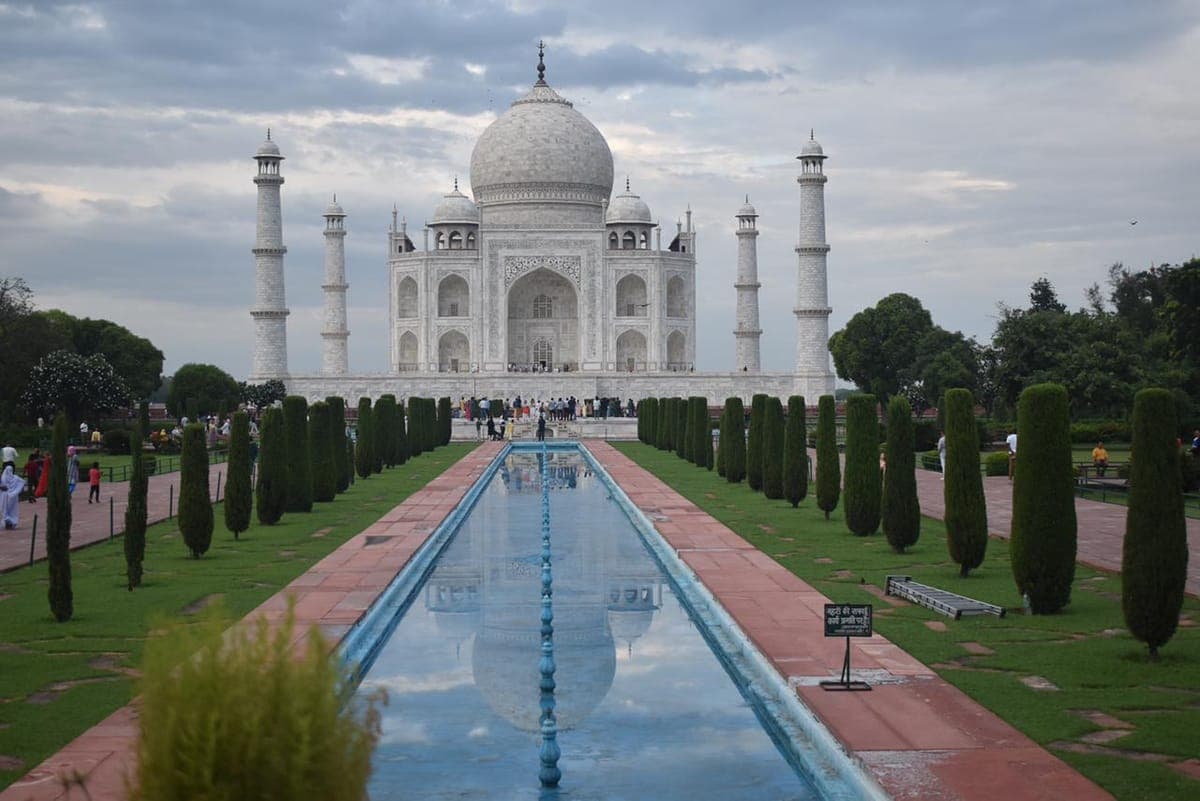
A white marble building under a pale sky is close to the worst case for an automatic meter. The camera averages the scene, decides it is too bright, and pulls the exposure down — which leaves faces dark. Correct for the faces and the monument blows out instead.
The fix is to decide which one you are protecting and expose for that deliberately. For architecture, protect the marble and lift the shadows later. For portraits, protect the face and let the sky go bright.
A starting point for each hour
| When | Where to start |
|---|---|
| Before sunrise | f/8, ISO 400–800, tripod or a steady rail, long exposure for the pool |
| First light | f/5.6–f/8, ISO 200, exposure compensation −2/3 to protect the marble |
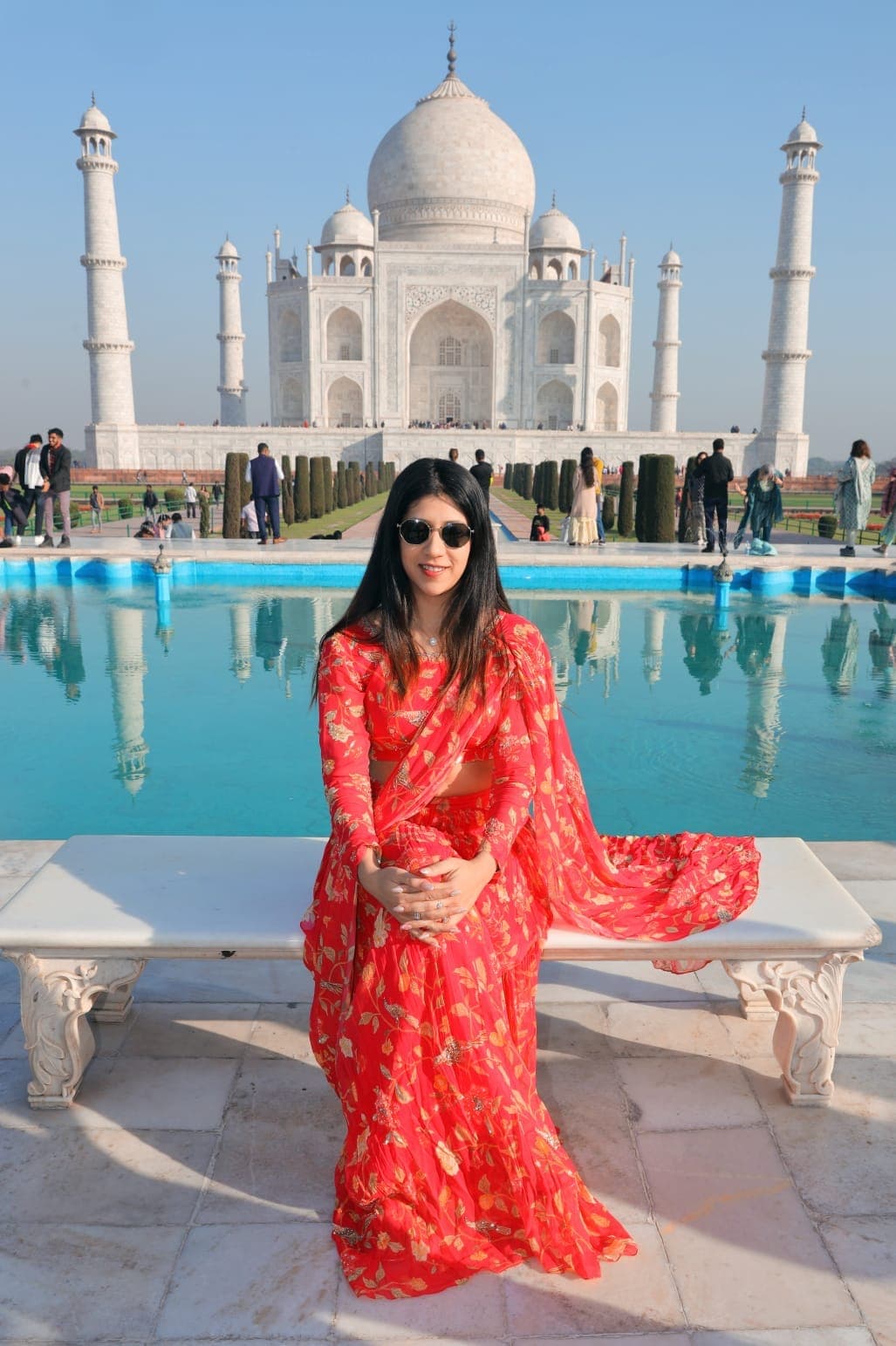
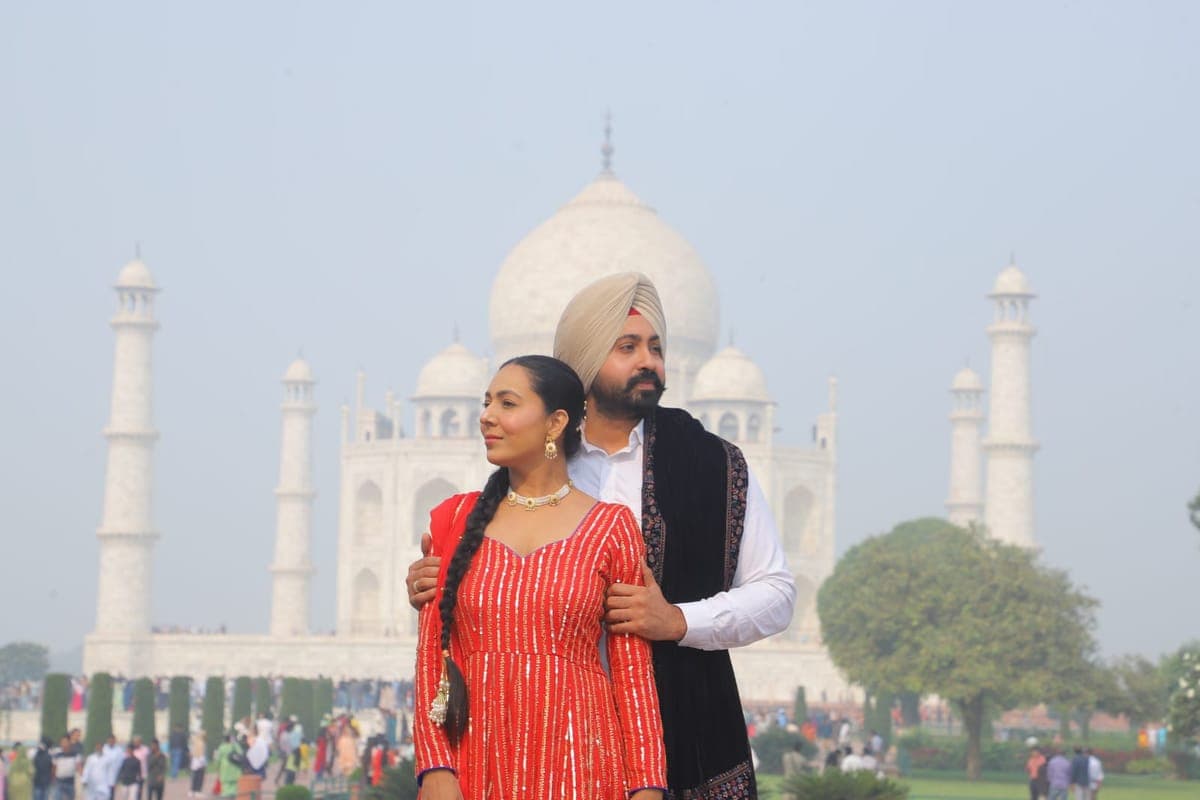
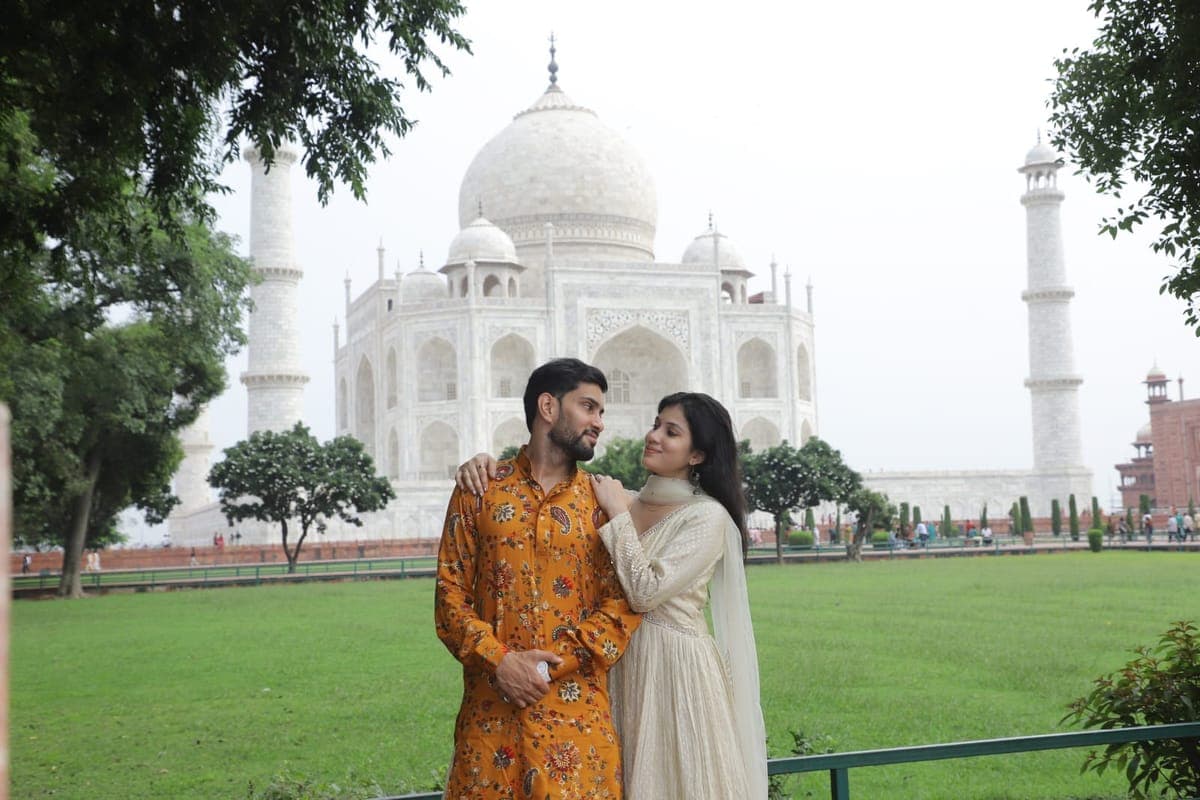
| Golden hour portraits | f/2.8–f/4, ISO 100, meter on the face |
| Mid-morning | f/8–f/11, ISO 100, polariser if you have one |
Three things that matter more than settings
- Be there before the gates open — no setting recovers a crowded walkway
- Shoot RAW: the marble-to-sky range is where JPEG detail dies
- Watch the horizon, not the subject — the symmetry makes a tilt obvious
If you are shooting it yourself
A phone or a single camera body needs no permission at all. The restriction is on professional kit: tripods, external flash and multiple lenses need a permit through security, and the permit goes to licensed photographers rather than visitors.
If you want a car, a licensed guide and the freedom to shoot it all yourself, that is exactly what the Transport + Guide day is for — no photographer, bring your own camera.
Questions we get asked
What camera settings should I use at the Taj Mahal?
Start around f/8, ISO 100–200 in daylight, and dial exposure compensation down about two-thirds of a stop to protect the white marble. Shoot RAW — the range between marble and sky is wider than a JPEG holds.
Can I take my own camera into the Taj Mahal?
Yes. A phone or a single camera body is fine without any permission. Tripods, external flash and multiple lenses need a photography permit.
Do I need a tripod at the Taj Mahal?
Only for long exposures before sunrise, and only with a permit — tripods are refused at security without one.