Short answer
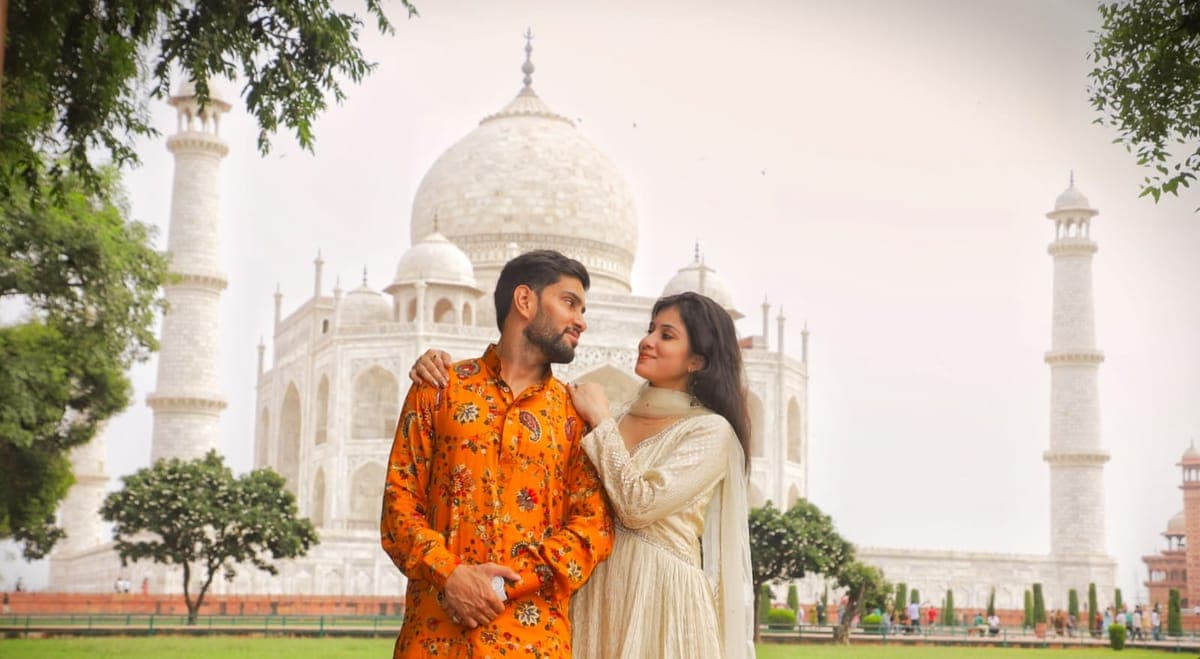
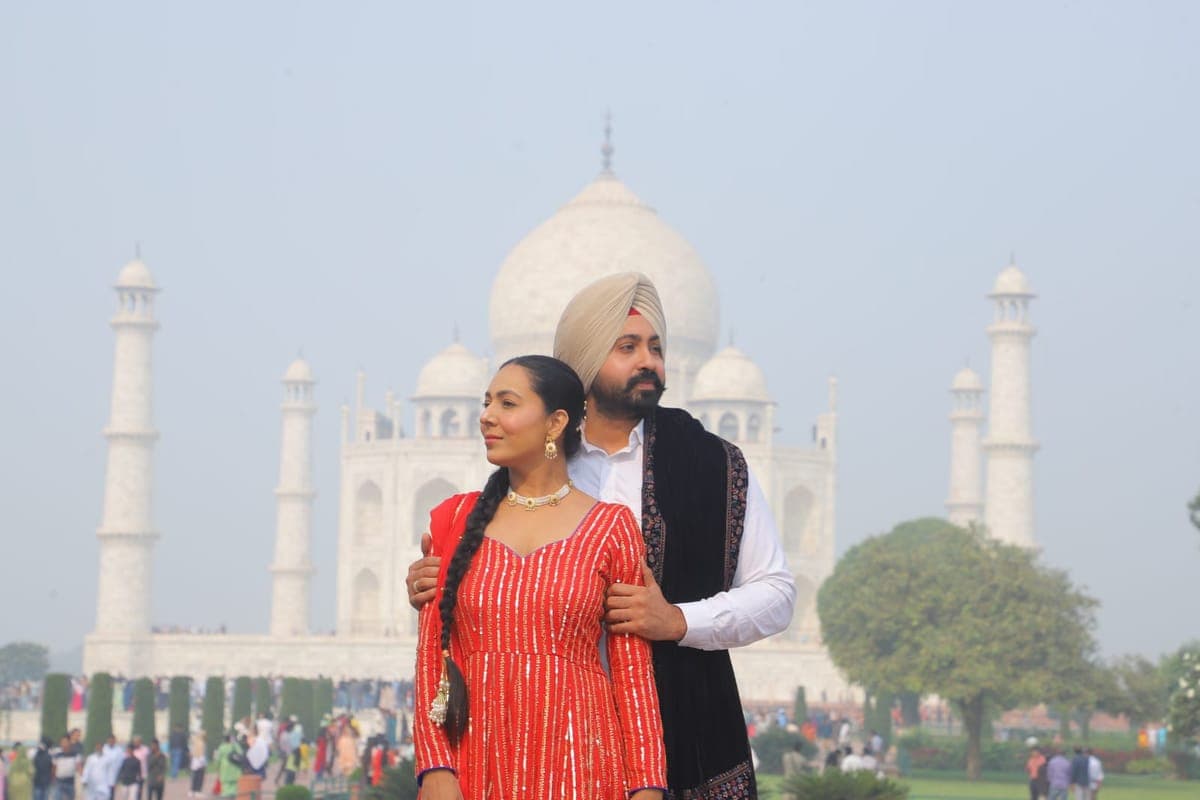
A couple can be photographed together at the Taj Mahal by a photographer holding the Ministry of Tourism permit, dressed as they like, as ordinary visitors — that is what most people mean by a pre-wedding shoot and it happens every morning. What is not allowed without separate written permission from the Archaeological Survey of India is a commercial production: lighting rigs, props, sets, crews, drones, or an outfit change on site. The two are confused constantly, which is why you will read that it is both freely allowed and completely banned.
Why the internet contradicts itself
Search this question and you will find photography studios promising full pre-wedding productions at the monument, travel blogs insisting pre-wedding shoots are banned outright, and guides calling it "yes and no". They are all describing something real; they are just describing different activities under the same words.
The monument treats photography as two separate things. One is a visitor being photographed. The other is a production using the monument as a location. The first needs a permit only for the equipment; the second needs written permission from the Archaeological Survey of India, applied for in advance, with fees.
Where the line falls in practice
A normal couple session is firmly in the left column. Everything we deliver — the 200+ photographs, the edited selection, the short cinematic cut — is made inside those limits, with a permit that covers the equipment and nothing that needs an area closed.
| This is a visitor being photographed | This is a production |
|---|---|
| A couple in their own clothes, arriving dressed | Changing outfits on site, or a wardrobe assistant |
| A photographer with a permit, handheld camera and tripod | Lighting rigs, reflector stands, a crew |
| Posing on the paths, the plinth, the benches | Props, furniture, staged sets, confetti |
| Handheld video alongside the stills | A video production with its own equipment |
| Staying within the visitor areas and the three-hour ticket | Closing an area, or shooting outside visiting hours |
What this means for your plan
- Arrive dressed. There is no changing room, and attempting one is the fastest way to be stopped
- A second outfit means a second location — the fort, Mehtab Bagh, a hotel terrace — not a change inside the complex
- Heavy lehengas and long trains are fine to wear; they are not fine to have assistants arranging on the marble
- No drones, under any arrangement. The airspace is restricted and that is an offence rather than a refusal
- No photography inside the burial chamber, whatever permit anyone holds
If you do want the full production
It exists, and it is a different undertaking: a written application to the ASI, a fee schedule that depends on what you are bringing, lead time measured in weeks rather than days, and no guarantee. If that is what you are planning, tell us at the enquiry stage and we will give you the real cost and timeline rather than take a deposit and find out later.
Most couples, once they see what a permitted session produces in the quiet hour, do not need it.
The rule that surprises everyone
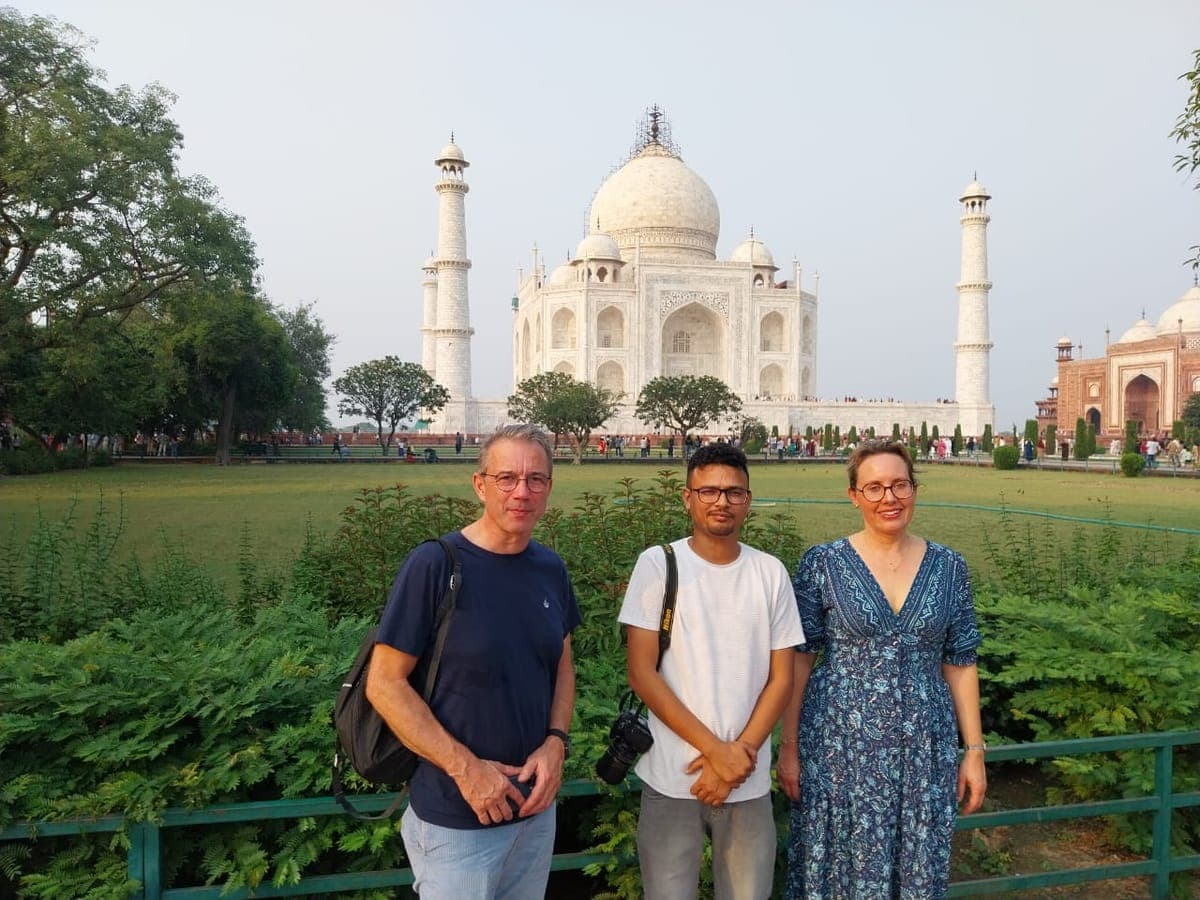
Inside the Taj Mahal, a guide is not allowed to accompany a working photographer. If you have booked both, the photographer is with you in the complex and the guide meets you at the exit or at the other monuments. We say this before you book, because finding out at the gate has ruined more than one morning for people who booked elsewhere.
Questions we get asked
Do I need to apply for permission myself?
Not for an ordinary couple session. The permit that matters is the photographer’s, and it is held year-round. You buy the normal entry tickets, and the ₹200 ticket if you want photographs on the marble plinth.
Can we wear a lehenga and sherwani?
Yes. Wear what you like and arrive in it. The only practical limits are stairs, marble that gets hot from March, and the fact that nobody can help you carry a train through a security queue.
Is a cinematic video allowed?
Handheld video alongside the stills is part of the couple session and is shot within the same permit. A separate video production with its own crew and equipment is the commercial route and needs ASI permission.
What happens if we are stopped?
With a permitted photographer, you are not — that is the point of the permit. The sessions that get stopped are the ones where someone brought a tripod on a visitor ticket, or tried to change clothes in the gardens.